


Introduction
Technology is advancing faster than ever, reshaping how we live, work, learn, create, and connect. In 2025 and looking ahead into 2026 and beyond, several groundbreaking innovations are moving from science fiction toward everyday reality. These trends span fields such as artificial intelligence, quantum computing, robotics, immersive experiences, connectivity, and more. Whether you’re a tech enthusiast, a business leader, or simply curious about the future, understanding these innovations will help you stay ahead in a rapidly changing world.
1. AI Everywhere: From Agents to Emotion‑Aware Assistants
Artificial Intelligence remains the most significant driver of future tech innovation. Advanced AI systems are becoming increasingly capable of not just responding to commands but performing complex, multi‑step tasks autonomously. Known as agentic AI, these systems can coordinate actions across applications, schedule meetings, manage workflows, and even execute purchases without direct human instruction. Such tools are reshaping how professionals and consumers approach automation, productivity, and problem‑solving. StartUs Insights
By 2035, experts predict AI assistants will become deeply integrated into daily life — not just tools, but proactive companions that anticipate needs, understand emotions, and support wellness, scheduling, and decision‑making holistically. Tom’s Guide
2. Quantum Computing: From Research to Real‑World Applications
Quantum computing is transitioning from theoretical research toward practical use cases. Although still in early stages, the technology is showing promise for solving problems impossible for classical computers, particularly in drug discovery, molecular simulation, and optimization problems. Hybrid quantum‑classical systems are expected to be the first mainstay applications, providing breakthroughs in pharma, materials science, and supply chain optimization. The Innovation Mode
Investment and infrastructure for quantum technologies are expanding globally. India, for example, not only developed quantum computing systems but is building dedicated tech hubs like Amaravati Quantum Valley to support innovation and commercial applications of quantum computing. Wikipedia+1
3. Intelligent Connectivity: 6G and Beyond
Connectivity is another cornerstone of future innovation. While 5G is still rolling out, the vision for 6G networks is already taking shape, promising speeds and intelligence that go far beyond current capabilities. Unlike previous generations, 6G is expected to be tightly integrated with AI, creating what researchers call the “intelligent network of everything.” This means smarter optimization of resources, widespread Internet of Things (IoT) connectivity, and real‑time responsiveness that could transform transport systems, healthcare, and autonomous machines. arXiv
As connectivity improves, technologies such as autonomous vehicles, smart cities, and immersive VR/AR experiences will flourish in new ways, with lower latency and vastly expanded capacity.
4. Robotics and Automation: Practical Machines in Everyday Life
Robotics innovation continues to push boundaries. Though full‑featured humanoid robots that work in every home are still in development, companies around the world are investing heavily in robots for industrial, commercial, and consumer applications. Robots are already transforming logistics, warehousing, retail support, and elder care, combining AI vision, real‑time mapping, and task‑automation capabilities. Tech Verse Today
Humanoid robots are beginning to show real utility in factories and controlled environments, and broader adoption is expected through the late 2020s into the 2030s as cost and complexity decline. The Innovation Mode
5. Immersive Technologies: AR and VR Evolution
Extended Reality (XR), which includes Augmented Reality (AR) and Virtual Reality (VR), is quickly emerging as one of the most transformational sets of technologies. Enhanced VR systems are delivering more immersive experiences with ultra‑high‑resolution visuals, improved haptics, and AI‑driven environments that adapt in real time. – Singsys Blog
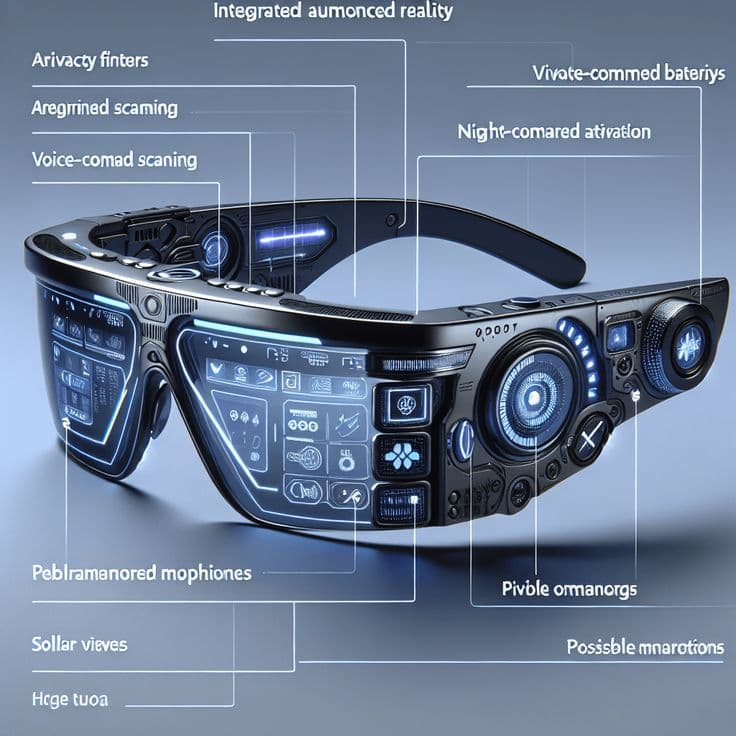
AR tech, especially lightweight glasses and mobile applications, is reshaping how we interact with the physical world. From virtual property tours to AR‑assisted surgeries, these technologies are expanding into professional, educational, and consumer applications. – Singsys Blog
6. Smart Infrastructure and IoT 2.0
The next generation of internet‑connected devices is moving beyond gadgets to become core infrastructure. IoT is extending into smart cities, real‑time environmental monitoring, digital supply chains, and connected industry platforms. Sensors integrated with AI can optimize traffic patterns, assess air quality, automate warehouse logistics, and monitor infrastructure health in real time. Tech Verse Today
With 5G (and eventually 6G), edge computing is enhancing these systems by bringing data processing closer to the source, reducing latency and enabling faster real‑time decisions. CloudOffix
7. Healthcare Tech Advancements and Personalized Medicine
AI‑driven diagnostics and precision medicine are among the most impactful innovations shaping the future of healthcare. Machine learning models trained on vast datasets can detect diseases earlier and more accurately than traditional methods. They help clinicians personalize treatments, predict health risks, and monitor recovery in real time. Tech Verse Today
Wearables and smart biosensors are part of this trend, providing continuous health data that AI systems interpret to offer actionable insights — from early disease markers to individualized wellness plans.
8. Ethical AI and Responsible Innovation
As emerging technologies become more powerful, ethical considerations and governance frameworks are rising in importance. Organizations are prioritizing AI transparency, fairness, and accountability to address concerns about bias, privacy, and trust. Stricter AI governance guidelines are being implemented worldwide to ensure that future technologies benefit society responsibly. Synergy Labs
This focus on ethical practice is shaping how AI and automation systems are deployed in sectors like finance, law, healthcare, and public service, ensuring technology supports human values rather than undermining them.
9. Edge Computing and Real‑Time Data Intelligence
Edge computing is becoming essential as data volumes skyrocket. Instead of sending all data to distant cloud servers, edge systems process information locally — on devices or nearby network hubs — enabling real‑time responses with minimal delay. This is especially critical for autonomous vehicles, industrial automation, healthcare monitoring, and interactive AR/VR experiences. CloudOffix
By combining edge computing with advancements in networking and AI, future tech systems can deliver faster, more secure, and more efficient data handling than ever before.
10. Future of Human Augmentation and Interfaces
Looking further ahead, technologies such as brain‑computer interfaces (BCIs) and smart contact lenses are expected to redefine how humans interact with machines. These interfaces could allow direct communication between neural activity and digital systems, expanding possibilities in accessibility, communication, and creative expression.
Similarly, emerging wearable innovations — from continuous glucose and blood pressure monitoring to next‑generation AR lenses — are moving toward embedding real‑time data into daily life, enhancing health and productivity.
Conclusion: A Tech‑Driven Tomorrow
The future of technology is a vibrant mix of powerful computing, intelligent systems, immersive experiences, and responsible innovation. From AI‑powered automation and quantum breakthroughs to connected infrastructure and adaptive robots, the world is entering a new era of technological transformation. These innovations promise not only to change industries like healthcare, manufacturing, and transport but also to redefine everyday life — how we learn, work, socialize, and solve complex global challenges.
As these technologies mature, ethical governance, sustainability, and human‑centered design will be critical in ensuring that innovation enhances lives while protecting privacy, equity, and societal well‑being.
FAQs About Future Tech Innovations
1. What is agentic AI?
Agentic AI refers to AI systems that can autonomously complete multi‑step tasks — such as scheduling meetings, organizing travel, or managing data — across apps and platforms without continuous human input. StartUs Insights
2. Why is quantum computing important?
Quantum computing offers exponential processing power for complex tasks like drug discovery, material simulation, and financial optimization, enabling solutions that are beyond the reach of classical computers. The Innovation Mode
3. What will 6G networks enable?
6G aims to provide ultra‑fast connectivity, integrated with AI, supporting massive IoT deployments, real‑time analytics, enhanced AR/VR experiences, and intelligent infrastructure. arXiv
4. How are immersive experiences improving?
Thanks to better displays, AI‑generated environments, haptics, and real‑time interaction, VR and AR experiences are becoming more lifelike, intuitive, and useful in education, healthcare, and entertainment. – Singsys Blog
5. Will humanoid robots be common soon?
While humanoid robots are advancing and entering industrial environments, fully autonomous consumer robots are still emerging and may become widespread through the late 2020s and 2030s.
